When people imagine the Silk Road, they often think of vast deserts, camel caravans, and legendary cities like Samarkand or Xi’an. Yet few realize that some of the most important chapters of Silk Road history unfolded in the mountains and valleys of modern-day Kyrgyzstan. Nestled between China and the heart of Central Asia, Kyrgyzstan was not just a passageway for trade — it was a living crossroads where civilizations met, cities thrived, and ideas traveled across continents.
Kyrgyzstan at the Heart of the Silk Road
From the 2nd century BCE until the 14th century, multiple branches of the Silk Road crossed Kyrgyz territory. These routes connected Tang-era China with Central Asia, Persia, and Europe, passing through the Tian Shan mountains and fertile valleys of today’s Chuy and Naryn regions. Silk, tea, ceramics, and paper moved westward, while horses, glassware, precious metals, and cultural influences flowed east.
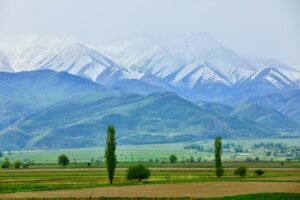
Kyrgyzstan’s geography made it essential to Silk Road trade. Mountain passes offered safer alternatives to desert routes, while valleys provided water, pasture, and shelter. Over time, this led to the rise of powerful cities, caravanserais, and spiritual centers — many of which remain hidden gems today.
Suyab: A Capital of Exchange and Culture
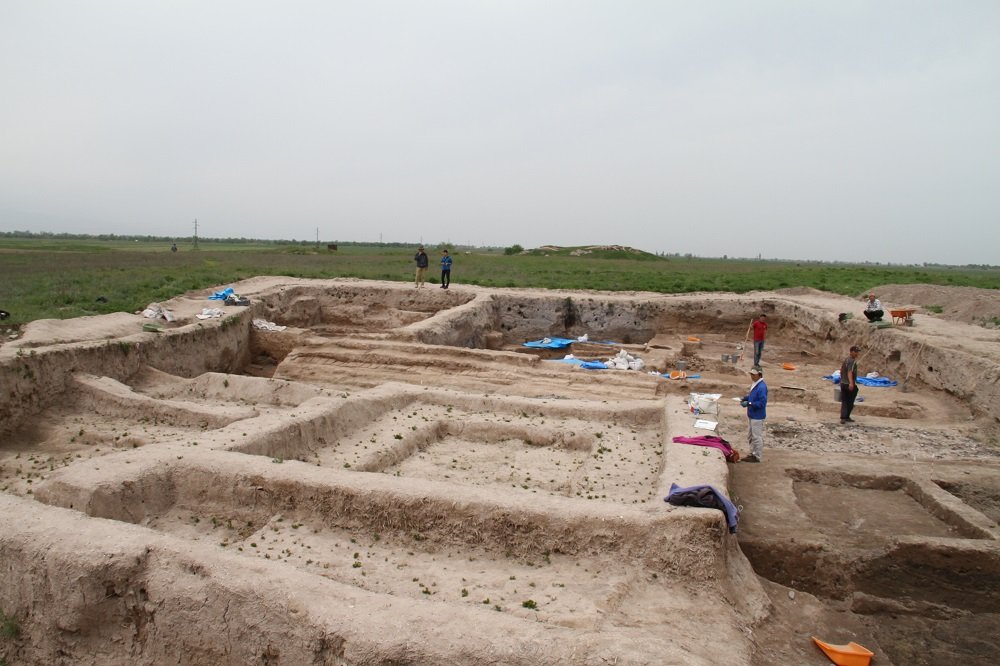
One of the most significant Silk Road cities in Kyrgyzstan was Suyab, known today as Ak-Beshim. Located in the Chuy Valley, Suyab flourished between the 6th and 8th centuries and served as the capital of the Western Turkic Khaganate.
Suyab was more than a political center. It was a vibrant multicultural city where Turkic nomads, Sogdian merchants, Chinese envoys, and monks lived side by side. Buddhism, Christianity, and early Islamic influences coexisted here, making Suyab a powerful symbol of Silk Road diversity. Chinese historical records mention the city as an important stop for diplomats and traders traveling west.
Burana Tower and the City of Balasagun
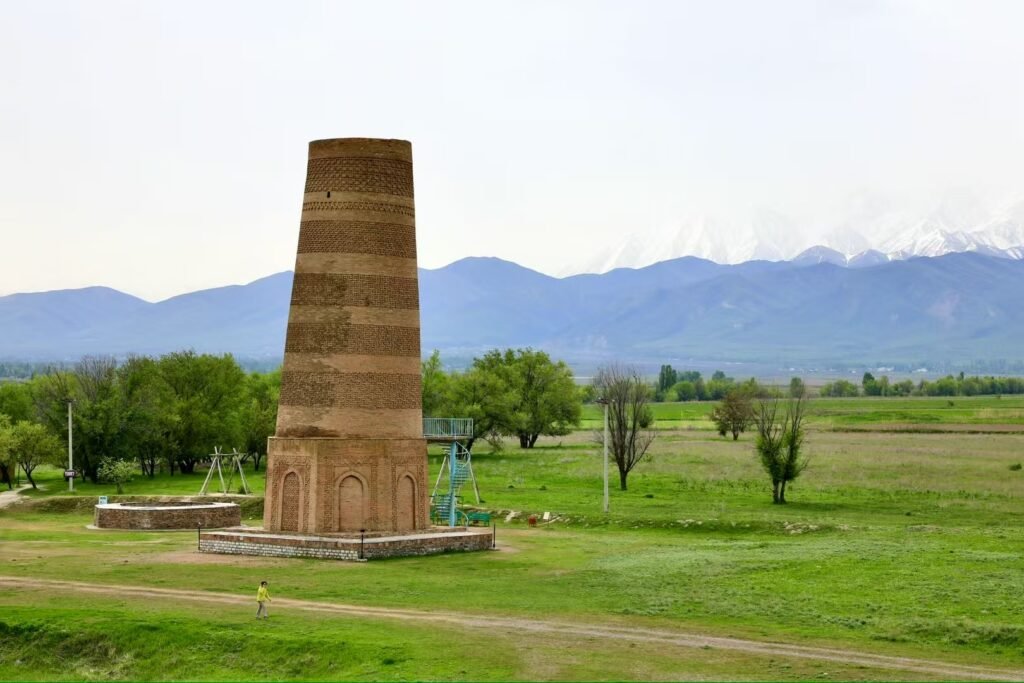
Near Suyab stands one of Kyrgyzstan’s most iconic historical landmarks — the Burana Tower. Built in the 11th century, this ancient minaret is all that remains of Balasagun, a major Silk Road city and capital of the Karakhanid state.
Surrounded by ruins, stone balbals (ancient Turkic statues), and burial sites, Burana offers visitors a tangible connection to medieval Silk Road life. The tower once served as both a religious structure and a navigation point for caravans, visible from far across the valley. Today, it stands as a powerful reminder of Kyrgyzstan’s urban civilization along the Silk Road.
Krasnaya Rechka: A Forgotten Buddhist Center
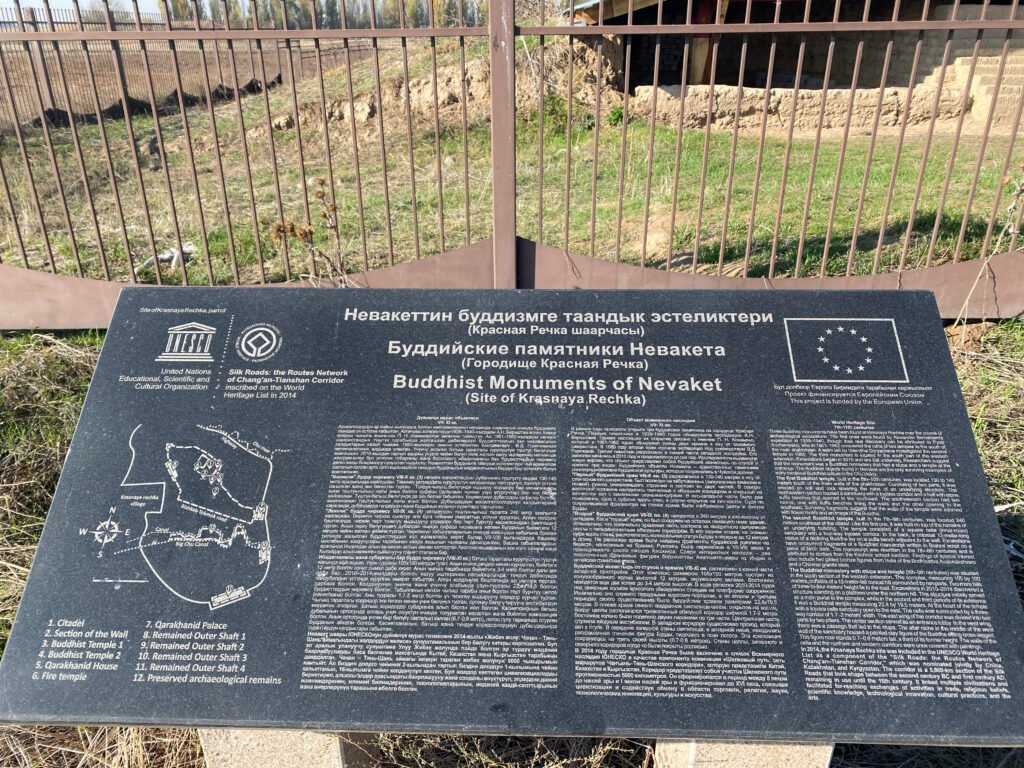
Another lesser-known but historically rich site is Krasnaya Rechka, an archaeological settlement that played an important role in the religious landscape of the Silk Road. Excavations here have uncovered remains of Buddhist temples, city walls, and residential areas.
Krasnaya Rechka highlights the spread of Buddhism from China into Central Asia. Along the Silk Road, merchants and monks carried not only goods, but also beliefs and philosophies. This site reflects how Kyrgyzstan served as a bridge for spiritual exchange, linking East Asian traditions with Central Asian societies.
Tash Rabat: Shelter in the High Mountains
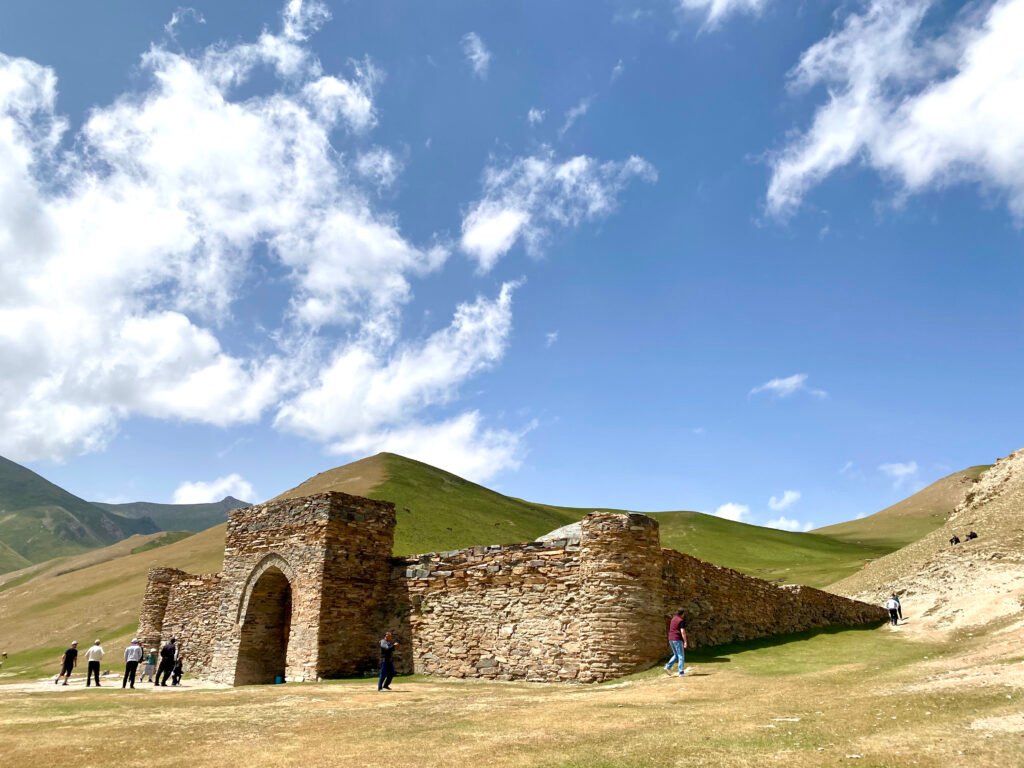
Far from the fertile valleys, deep in the mountains of Naryn region, lies Tash Rabat — one of the best-preserved caravanserais on the Silk Road. Built entirely of stone at an altitude of over 3,000 meters, Tash Rabat offered protection to traders, pilgrims, and messengers crossing harsh mountain passes.
Its remote location tells a story of endurance and trust. Travelers depended on places like Tash Rabat for safety, warmth, and rest before continuing their journeys across continents. Today, standing inside its stone corridors evokes the atmosphere of a Silk Road journey frozen in time.
A Living Legacy of Connection
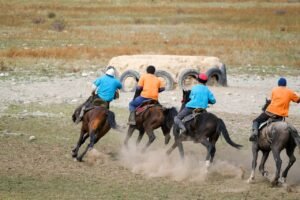
Kyrgyzstan’s Silk Road heritage is not confined to museum displays or ancient ruins. It lives on in nomadic traditions, hospitality, and the rhythm of mountain life that has changed little over centuries. Exploring these sites allows travelers to experience the Silk Road as a living story — one shaped by movement, exchange, and human connection.
For those seeking meaningful travel beyond the usual routes, Kyrgyzstan offers a rare opportunity to walk the paths of ancient caravans and discover the hidden cities that once linked East and West.